The International System of Units (SI) is the modern form of the metric system and the world standard for measurement. These fundamental units help scientists, engineers, and researchers communicate precisely about measurements across different fields and countries.
The SI system consists of seven base units:
- Meter (m) – Measures length
- Kilogram (kg) – Measures mass
- Second (s) – Measures time
- Ampere (A) – Measures electrical current
- Kelvin (K) – Measures temperature
- Mole (mol) – Measures amount of substance
- Candela (cd) – Measures luminous intensity
From these base units, scientists derive many other units for measuring quantities like force (Newtons), pressure (Pascals), and energy (Joules). This standardization ensures that measurements are consistent and reproducible worldwide.
The SI system uses prefixes to indicate scale. For example, a kilometer (km) is 1000 meters, while a millimeter (mm) is 1/1000 of a meter. Common prefixes include:
- kilo- (k): 1000
- centi- (c): 1/100
- milli- (m): 1/1000
- micro- (μ): 1/1,000,000
The precision and universality of SI units make them essential in fields ranging from manufacturing and engineering to scientific research and healthcare. Whether measuring the microscopic dimensions of semiconductor components or calculating drug dosages, SI units provide a common language for accurate measurement.
Origins and Development
The path to our modern SI system began during the French Revolution, when measurements varied widely between regions and created significant obstacles for trade and scientific advancement. The metric system emerged as the first step toward standardization, with scientists developing it based on natural constants rather than arbitrary standards. For example, they defined the meter as one ten-millionth of the distance from the North Pole to the equator through Paris.
As science advanced through the 19th and 20th centuries, the need for greater precision led to the adoption of the SI system in 1960 by the General Conference on Weights and Measures (CGPM). The system continues to evolve, with the most recent update in 2019 redefining four base units in terms of fundamental physical constants. This evolution created the framework for the precise measurements that enable modern technology.
SI Units in Manufacturing and Engineering
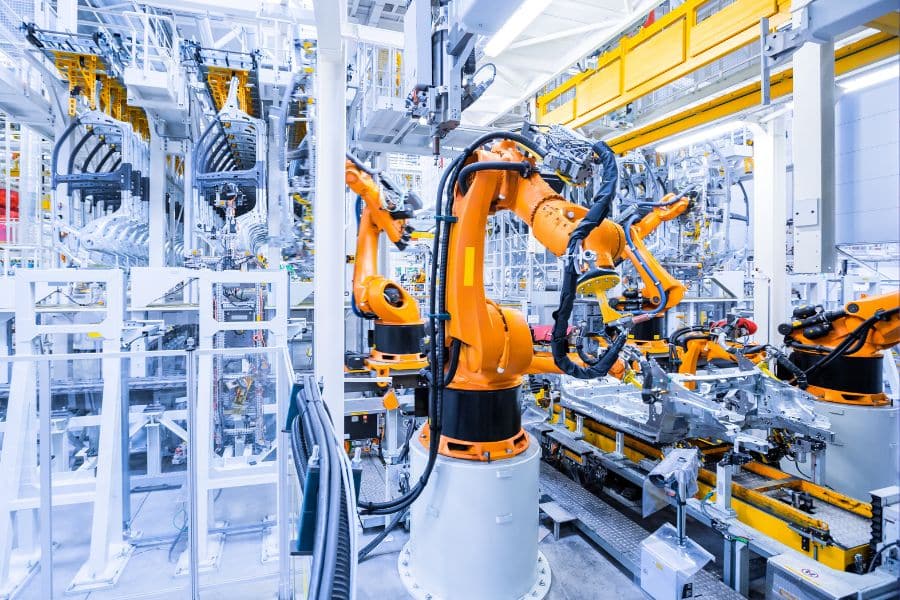
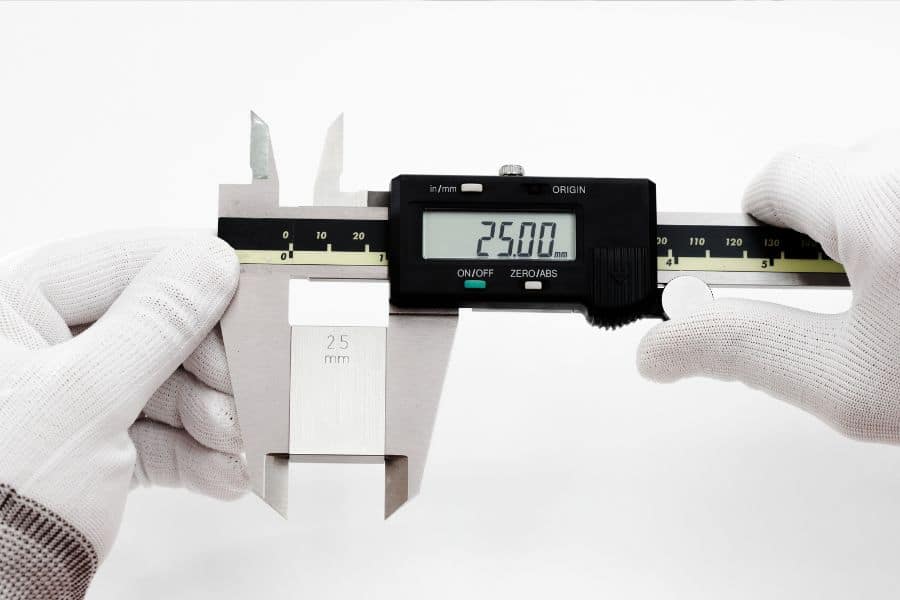
In manufacturing and engineering, SI units are the cornerstone of precision and quality. Engineers use millimeters and micrometers to design components that must fit together with microscopic precision. For example, semiconductor manufacturers measure critical dimensions in nanometers when fabricating computer chips, while aerospace engineers calculate structural loads in newtons and pascals to ensure aircraft safety.
Production lines rely on SI measurements at every stage. Quality control systems verify dimensions in micrometers, measure forces in newtons, and monitor temperatures in degrees Celsius. These standardized measurements ensure that parts manufactured in different facilities – or even different countries – maintain perfect compatibility. A bolt made in Germany will thread perfectly into a nut made in Japan because both manufacturers follow the same SI standards.
These manufacturing standards extend into scientific research, where laboratory equipment and experimental setups require precise calibration. Researchers measure laser wavelengths in nanometers, chemical concentrations in moles per liter, and electrical current in amperes. This standardization allows scientists worldwide to replicate experiments and validate results.
In Summary
The International System of Units stands as one of science’s most significant achievements in standardization. In modern manufacturing, where components produced on different continents must fit together with microscopic precision, SI units provide the common language that makes modern technology possible. From the production of semiconductor chips measured in nanometers to the construction of massive aircraft components, these standardized measurements ensure consistency and reliability across all technical fields. As technology continues to advance, pushing the boundaries of measurement at both microscopic and astronomical scales, the SI system adapts and evolves while maintaining its role as the global standard for measurement, enabling innovations in engineering, manufacturing, scientific research, and countless other domains in our interconnected world.